Showing posts with label Professionals. Show all posts

June 5, 2019

Is Too Much Screen Time Bad for Kids?


You check in to say good night to your son only to find he is playing "Fortnite" in bed.

Or your daughter is busy texting when she is supposed to be studying.

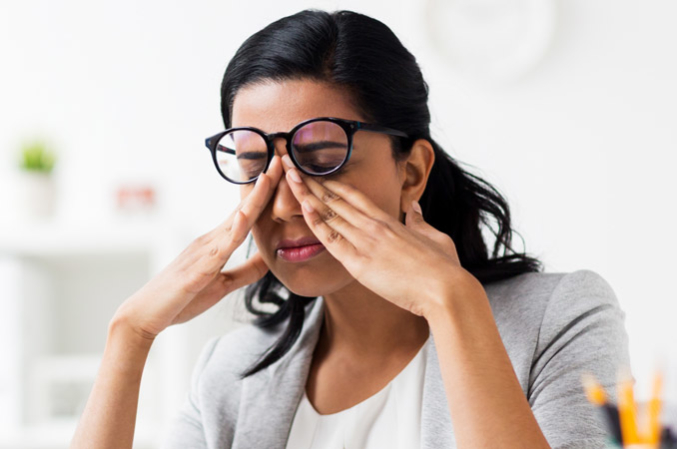
Children and their phones are inseparable today, and all that reading and playing games on their handheld devices may be harming their vision.

To reduce screen time, some parents ban phones at the dinner table. This applies to both adults and children. And in some homes, playing games or texting must stop two hours before bedtime.

To put a hard stop on screen time, some moms and dads set time limits on their children's daily device use. For example, when a total of two hours of screen time has been reached, no more texting, game playing or YouTube watching.

Definition of "screen time"

 "Screen time" refers to the amount of time a person spends staring at the digital displays of computers, tablets (iPads, for example) and smartphones.

According to The Vision Council, 72 percent of American parents report their children routinely engage in more than two hours of screen time per day. And it's very likely most kids actually spend significantly more time staring at screens than their parents think they do.

As kids grow, their screen time tends to grow with them. And even very young children these days are spending a significant amount of time each day staring at screens. According to Common Sense Media, young children in the U.S. spend the following amount of time each day using digital devices:

  • Kids under 2 years of age: 42 minutes per day
  • Kids ages 2 to 4: 2.5 hours per day
  • Children ages 5 to 8: nearly 3 hours per day
Read more HERE

 Pearle Vision-Roswell
10775 U.S. Hwy 9
Roswell, GA 30076
770-998-9656 
Pearle Vision-Roswell

May 29, 2019

Eye Twitching: 8 Causes and Remedies


What is eye twitching?

Eye twitching — which actually is twitching of an eyelid — is common and harmless.

Most eye twitching lasts only a few minutes, but sometimes an eyelid twitch can persist for days or longer. If you have an eye twitch that doesn't go away relatively quickly, see an eye doctor.

The medical term for eye twitching is myokymia.

If you experience eye twitching that doesn't go away, this could signal a serious neurological condition affecting the eyelid — such as blepharospasm or hemifacial spasm. These relatively rare conditions are more obvious and severe than common eye twitching and should be evaluated immediately by an eye doctor.


What causes eye twitching?

Triggers of eye twitching include:
  • Stress
  • Fatigue
  • Eye strain
  • Caffeine
  • Alcohol
  • Dry eyes
  • Nutrition problems
  • Allergies

If you experience eye twitching, take a close look at this list and note which of these potential triggers might apply to you. Sometimes, making minor changes to your diet and lifestyle can significantly reduce your risk of eye twitching or help make an eyelid twitch disappear.

Read more HERE

Pearle Vision-Roswell
10775 U.S. Hwy 9
Roswell, GA 30076
770-998-9656 
Pearle Vision-Roswell
 

May 22, 2019

How Many Pairs of Glasses Do You Need?


How many pairs of eyeglasses do you need? That depends on your vision needs, your vision insurance, your budget – and even your fashion sense.

Most people get prescription eyeglasses to correct their vision, but other specialty eyewear includes computer glasses to reduce digital eye strain, polarized sunglassesto reduce glare and block harmful ultraviolet rays, readers to help you see up close, and ski goggles and sports glasses for when you’re on the slopes or riding your motorcycle.

So, how many glasses do you need?


“There are a lot more options available than there were before,” says Clifford W. Brooks, OD, FAAO, of the Indiana University School of Optometry. “But people don’t consider specialty eyeglasses because they don’t recognize that they would be helped by them.”

Meet some people who have more than one pair of spectacles — and in one case nearly as many glasses as some people have shoes.

Sunglasses


Sunglasses are more than just a fashion accessory. Sunglasses are your first line of defense to protect your eyes against the damaging ultraviolet (UV) rays of the sun.

“No matter the season or the location, people should protect their eyes with good quality sunglasses that block out UV light,” says American Optometric AssociationPresident Samuel D. Pierce, OD. “Even prescription glasses can be made with tints and full UV protection.”

But fashion appeal is important, too — because it's often what drives a sunglasses purchase.

Bob Matsuoka of New York City is a sunglasses devotee. “They are like shoes for me!” He stores a couple of dozen non-prescription pairs in a repurposed cigar humidor, ready to pop on over his contact lenses for everyday wear.

“If I see a nice pair of sunglasses, I tend to get them. They’re an expression of personality and fashion — nothing practical about them,” he says.

Matsuoka’s spectacles collection also extends to several more functional pairs of shades for his outdoor activities. Two pair are side-shielded to block the wind when he’s riding his electric skateboard, and he has three sets of snowboarding goggles.

Read more HERE
 Pearle Vision-Roswell
10775 U.S. Hwy 9
Roswell, GA 30076
770-998-9656 
Pearle Vision-Roswell

May 8, 2019

Nutrition For Healthy Eyes


Research suggests that antioxidants and other important nutrients may reduce your risk of cataracts and macular degeneration. Specific antioxidants can have additional benefits as well; for example, vitamin A protects against blindness, and vitamin C may play a role in preventing or alleviating glaucoma.

Omega-3 essential fatty acids appear to help the eye in a variety of ways, from alleviating symptoms of dry eye syndrome to guarding against macular
 damage.

Eye Benefits Of Vitamins And Micronutrients

The following vitamins, minerals and other nutrients have been shown to be essential for good vision and may protect your eyes from sight-robbing conditions and diseases.

Incorporating the following foods in your diet will help you get the Recommended Dietary Allowance (RDA) of these important eye nutrients. Established by the Institute of Medicine (National Academy of Sciences), the RDA is the average daily dietary intake level of a nutrient sufficient to meet the requirements of nearly all healthy individuals in a specific life stage and gender group.

While the RDA is a useful reference, some eye care practitioners recommend higher daily intakes of certain nutrients for people at risk for eye problems.

Read more HERE

Pearle Vision-Roswell
10775 U.S. Hwy 9
Roswell, GA 30076
770-998-9656 
Pearle Vision-Roswell

May 1, 2019

Corrective Eye Surgery Basics


Until contact lenses were popularized in the 1950s, eyeglasses for at least the past seven centuries had been the only practical way to correct refractive vision errors.

Now, several modern approaches to corrective eye surgery range from laser reshaping of the eye's surface in procedures such as LASIK and PRK to surgical insertion of artificial lenses to correct eyesight.

In LASIK, PRK, and similar procedures, laser energy reshapes the curvature of the eye's clear front surface (cornea) to alter the way light rays enter the eye. Artificial lenses surgically inserted into the eye also can refocus light rays to sharpen vision.

The Evolution of Corrective Eye Surgery

Over the past 25 years, surgical techniques, tools, and procedures for vision correction have evolved rapidly.

Radial Keratotomy (RK), used in the United States primarily during the 1980s, involved cutting spoke-like incisions to flatten the eye's surface mainly to correct nearsightedness.

But results, especially long-term, created problems for some individuals. Significant glare, regression, fluctuating vision, and other side effects such as night vision problems were common in patients who had RK for higher prescription strengths, while such side effects were less frequent in patients with lower prescriptions.

RK is now virtually obsolete as a primary vision correction procedure for these reasons and because of advances in laser vision correction procedures.

Photorefractive Keratectomy (PRK) was the first successful laser vision correction procedure used to remove (ablate

) tissue directly from the eye's surface to change the curvature of the cornea. PRK, also known as surface ablation, was performed outside the United States during the 1980s and received FDA
 approval in 1995. PRK is still commonly used, but LASIK (see below) is by far the most popular laser procedure today.

However, PRK has made somewhat of a comeback in recent years because of studies indicating that PRK and LASIK produce similar outcomes. Also, nerve regeneration in the eye's surface appears to take place faster with PRK than with LASIK following a procedure, which could have implications for reducing dry eye and other complications that might occur until the healing process is complete.

Because PRK is a surface procedure, there also is no risk of surgical flap complications. PRK does not involve creating a thin, hinged flap on the eye's surface, as occurs with LASIK. PRK also appears to be a safer procedure in cases when a person's cornea may be too thin for LASIK surgery.

Recent technological advances have given eye surgeons better methods of creating thinner flaps in a predictable way, meaning that people with thin corneas now might be candidates for a LASIK procedure.

However, you probably should consider a different type of vision correction procedure if you have a thin cornea and high degree of myopia that would require extra ablation to reshape the eye.

Read more HERE

Pearle Vision-Roswell
10775 U.S. Hwy 9
Roswell, GA 30076
770-998-9656 
Pearle Vision-Roswell

April 22, 2019

Happy Earth Day!


Earth Day Tip: Wash your clothes only when necessary, use cold water and line dry.

Let's work together to make the world a better place! 


Pearle Vision-Roswell
10775 U.S. Hwy 9
Roswell, GA 30076
770-998-9656 
Pearle Vision-Roswell

April 17, 2019

We Want Your Feedback!


We value your feedback! As a loyal customer, we would love hear about your latest experience with us! Please take a minute to take this quick survey


Pearle Vision-Roswell
10775 U.S. Hwy 9
Roswell, GA 30076
770-998-9656
Pearle Vision-Roswell

March 13, 2019

High-Quality Prescription Lenses


In our stores, you’ll find that there are many choices of lenses and we understand it can be a bit overwhelming to know which lenses are right for you and your lifestyle. If you don’t know which lens option is right for you that’s okay, we are here to help. Below are a few brief descriptions of lenses so you can get a better idea of your options before you visit us for your appointment. Scheduling An Eye Exam

Lens Prescriptions:

Single Vision: Lenses that help correct nearsightedness, farsightedness, and astigmatism. These lenses are one power edge to edge and help with one visual need. They also help defend against digital eye strain so your eyes stay relaxed, comfortable and healthy.
Bifocal: Lenses that are prescribed to correct two fields of vision which are divided by a line that sits horizontally across the lens. The top portion of the lens is used for distance, while the bottom portion of the lens is used for near vision. With bifocal lenses, you can enjoy reading without straining your eyes.
Trifocal: Trifocals help correct the intermediate area by adding a second small lens segment above the near vision segment. This results in a total of three power zones The intermediate segment allows the wearer to see things about 18-24 in from the face like the computer screen or the car dashboard.
Progressive lenses: Progressive lenses provide a smooth transition from distance through mid to near vision. Progressive lenses give you the most natural vision correction at all distances. With progressive lenses, you can look up to see clear across a room and far in the distance.

Lens Materials

Plastic: Plastic lenses are a good "basic lens" for entry level prescriptions (below -2 diopters). It is inherently more scratch insistent than Poly, and are also better for tinting.
Polycarbonate (Poly): Poly is 10 times more impact-resistant than plastic or glass lenses and they provide 100% protection from the sun's harmful UV rays. They are the preferred material for children’s glasses, sunglasses, and sports eyewear.
HI-Index Lenses: Hi-Index lenses are thinner and lighter than regular plastic lenses. Their slim appearance reduces the magnified "bug-eye" look that conventional lenses cause in strong farsighted prescriptions.

Upgrades:

Tints: Light conditions can change considerably though out the day and tinted lenses can relieve the burden that these lighting contrasts can have on the eyes. Tints provide natural vision and color perception, even in glaring or diffuse light. Whether you are indoors or outdoors, tints can reduce glare, improve contrast, and enhance depth perception to match your lifestyle. Use the guide below to choose the ideal lens tints for you.
  • Yellow or Orange: heightens contrast in overcast, hazy, low-light conditions. Filters blue light for sharper focus
    • Ideal for cycling, hunting, shooting, skiing, snowboarding, snowmobiling, indoor basketball, handball, racquetball, tennis.
  • Amber, Rose, or Red: Heightens contrast in cloudy and sunny conditions but can cause significant color imbalances
    • Ideal for cycling, fishing, hunting, shooting, skiing, snowboarding, snowmobiling, water sports.
  • Amber, Copper, or Brown: Blocks blue light and enhance contrast and visual acuity. Useful in improving contrast on grass and against blue skies.
    • Ideal for cycling, fishing (especially in waters with grassy bottoms), golf, hunting, skiing, water sports.
  • Green: heightens contrast (minimally) while preserving color balance
    • Ideal for Baseball, golf
  • Gray: reduces overall brightness while preserving 100% color recognition
    • Ideal for outdoor sports in bright sunlight
HD: Offers a sharper and a 40% wider field of vision in all lighting conditions. HD lenses provide more clarity and precision because they are digitally customized to fit your eye and vision needs.
Anti-scratch: No lenses are 100% scratch proof, however there is an option to treat lenses with a scratch-resistant coating so that they become more resistant to scratching and will last longer.
Anti-Reflective (A/R) coatings: A thin coating placed on lenses helps eliminate glare from eyeglasses and provide better vision for night driving and more comfortable vision for reading and computer use.
Photochromic: These light-adaptive lens are clear when you are indoors but darken when activated by the sun's UV rays outdoors. This added protection helps defend the eyes against over-exposure to UV radiation.
Polarized:Polarized lenses have a filter that permits only vertical light rays to pass through the lens thus blocking glare from horizontal rays that are produced by flat surfaces. Blocking these horizontal rays makes your vision crisp and clear, reducing eye strain. Most polarized lenses offer UV protection for your eyes as well.

Pearle Vision-Roswell
10775 U.S. Hwy 9
Roswell, GA 30076
770-998-9656 
Pearle Vision-Roswell

February 6, 2019

Vision and the Athlete


Written by Troy Bedinghaus, OD for Very Well Health

Healthy eyes and vision are extremely important for optimum sports performance. For an athlete, vision is much more than simply seeing clearly. Several important vision skills can affect how well you play your sport. Vision is key to top performance in many sports. If you want to play at your best, it is essential to make certain you are seeing your absolute best. A complete eye exam by a board-certified optometrist will reveal any vision problems that could be hindering your performance. If a problem is discovered, your doctor will be able to recommend options to help you see your best.

Visual Skills for Sports

Several visual skills are important for improving your game in all sports. An eye exam can help to determine certain skills that you may need to improve upon. An optometrist specializing in sports vision can help you find ways to improve the following valuable skills.
  • Dynamic Visual Acuity: Visual acuity refers to the clarity of your vision. Dynamic visual acuity is how clearly you see objects that are moving quickly. If you play a sport with a fast-moving ball, such as tennis or soccer, you need to be able to clearly see the ball while you or the ball is moving fast. Athletes with good dynamic visual acuity have an advantage in sports like these.
  • Visual Concentration: While playing your sport, it's easy to be distracted by things that are going on around you. It is natural for your eyes to react to anything that happens in your field of vision, even if you're concentrating on your game. Visual concentration is the ability to screen out distractions and remain focused on the ball or the target.
  • Eye Tracking: Eye tracking is the process of measuring either the point of gaze (where one is looking) or the motion of an eye relative to the head. When you are playing a sport with a fast-moving ball, you need to be able to follow objects without moving your head much, as doing so throws your body off balance and slows you down. Eye tracking helps you maintain better balance and react more quickly.
  • Eye-Hand-Body Coordination: Eye-hand-body coordination describes the way in which your hands, feet, and body respond to the information transferred through your eyes. Most sports rely heavily on timing and body control.
  • Visual Memory:  In many sports, an athlete needs to process and remember a fast-moving, complex picture of people and things. This is known as a visual memory. An athlete with good visual memory seems to always be in the right place at the right time.
  • Visualization:  Visualization is a cognitive tool that involves using imagination to realize all aspects of an object, action or outcome. Picturing yourself swishing a three-pointer or hitting a perfect drive down the middle of the fairway can actually help you do it. Visualization is mentally seeing yourself performing well in your mind while your eyes are concentrating on something else, such as the ball.
  • Peripheral Vision:  Peripheral vision, or side vision, is the ability to see objects and movement outside the direct line of vision. When a basketball player sees his teammate out of the corner of his eye, he is using his peripheral vision. Increasing your ability to see action to the side without turning your head is important in every sport, as not all of the action takes place right in front of you.
  • Visual Reaction Time:  Visual reaction time is the speed with which your brain interprets and reacts to an action. All sports require a quick visual reaction time. For example, if your arms don't swing at the ball as soon as it crosses the plate, you're probably going to get a strike.
  • Depth Perception: Depth perception is the ability to judge the distance of objects and the spatial relationship of objects at different distances. In sports, depth perception enables you to accurately judge the distance between yourself, the ball, your opponents, teammates, boundary lines and other objects.
  • Color Vision:  Color vision is the process by which your eyes detect color. Your ability to detect different colors and shades is important in certain sports such as football.

Eyeglasses to Boost Performance

Sports eyewear, or eyeglasses that are made specifically for an athlete, can have a profound effect on an athlete's performance. Sports specific eyewear is becoming increasingly popular among athletes. Being able to see clearly on a sunny day can massively improve your performance in many outdoor sports. Polarized lenses help to eliminate annoying glare from the sun. You’ll see everything you need with sharpened vision. Plus, you’ll be protected from all the harmful UV with a good pair of sunglasses. Also, specific tint colors will improve contrast in order to allow you to see certain colored balls quicker and easier.

Eye Protection for the Athlete

All athletes, and especially those in certain high-risk sports, need to consider eye protection when playing their game. Every year, thousands of children and adults suffer sports-related eye injuries. However, nearly all eye injuries can be prevented with proper protective eyewear. An injury to the eye can be serious. The most common types of eye trauma that can result from sports injuries are blunt injuries, corneal abrasions, and penetrating injuries. As with any eye injury, it is important to seek care from a doctor.
Many people believe that wearing regular eyeglasses during sports will protect their eyes. However, the lenses of regular eyeglasses can shatter upon impact by a ball, which could lead to a penetrating injury. All sports goggles and glasses should be made with polycarbonate lenses. Polycarbonate lenses are much stronger than regular lenses. Each sport has a certain type of recommended protective eyewear, determined by ASTM International (a global standards developer). High-risk sports that require protective eyewear include basketball, baseball, hockey, football, lacrosse, fencing, paintball, water polo, racquetball, soccer, and downhill skiing.

A Word From Verywell

Achieving your personal best in your chosen sport depends on your motivation and devotion. But remember also that your eyesight plays a huge factor in your overall athletic performance. Sports eyewear is becoming more and more popular among an athlete's list of equipment. However, your clarity of vision and visual skills are the most important factors in enhancing your game.
 Pearle Vision-Roswell
10775 U.S. Hwy 9
Roswell, GA 30076
770-998-9656 
Pearle Vision-Roswell

January 23, 2019

How to Protect Your Eyes at Work


Written by Troy Bedinghaus, OD for Very Well Health


Eye injuries are very common at the workplace. According to the National Institute for Occupational Safety and Health (NIOSH), about 2,000 people in the US sustain vision-threatening eye injuries on the job every day. Accidents and injuries to the eyes at work include chemical and grease splashes, steam burns, ultraviolet radiation exposure, and flying pieces of wood or metal. Severe damage to the eye is often caused by actual cuts and scrapes to the eye itself.
Besides serious eye injuries, some workers may also be at risk of developing diseases from eye exposure. Some infectious diseases can be transmitted through the mucous membranes of the eye. Direct exposure to blood splashes, respiratory droplets from coughing, or from touching the eyes with contaminated fingers or other objects are often culprits. The good news is that safety experts and eye doctors believe that eye protection can lessen the severity of eye injuries, and in some cases even prevent them.

Why Eye Injuries Happen at Work

People at work usually experience eye injuries for two main reasons: not wearing eye protection or wearing the wrong kind of eye protection. A Bureau of Labor Statistics survey determined that nearly three out of five workers who received eye injuries were not wearing eye protection at the time of the accident. In most of these cases, the workers believed that eye protection was not required for the task they were involved in. The Occupational Safety and Health Administration (OSHA) requires that workers use eye and face protection at all times if there is a reasonable probability of injury that could be prevented. Personal protective eyewear, including goggles, face shields, safety glasses, or full face respirators must be used when an eye hazard exists. Proper eye protection depends on the type of hazard, the circumstances of exposure, and individual vision needs.

Potential Eye Hazards at Work

Whenever a risk for eye injury exists on the job, proper eye protection must be used. Keep in mind that some jobs may include more than one potential eye hazard. Protection is needed if any of the following eye hazards are present:
  • Projectile objects: dust, concrete, metal, wood, etc.
  • Chemicals: splashes and fumes
  • Radiation: visible light, ultraviolet radiation, heat or infrared radiation, and lasers
  • Bloodborne pathogens: hepatitis or HIV from blood and body fluids
Some jobs pose more of a vision hazard than others. The following occupations have a high risk for sustaining eye injuries:
  • construction
  • carpentry
  • manufacturing
  • mining
  • electrical
  • auto repair
  • plumbing
  • welding
  • maintenance

How to Protect Your Eyes on the Job

The first step in protecting your eyes and vision at the workplace is being aware that a risk of injury exists. Doing the following three things can help keep your eyes safe:
  1. Eliminate hazards at the beginning of the day by using machine guards, work screens or other engineering controls.
  2. Use proper eye protection.
  3. Keep your safety eyewear in good condition. Replaced damaged safety eyewear.

Types of Safety Eye Protection

First of all, to be completely safe, find out the proper safety requirements for your type of work and make sure the workplace is as safe as possible. Remove eye hazards wherever possible. The type of eye protection you should wear depends on the hazards present in your workplace. Consider the following suggestions:
  • If you are working in an area that has particles, flying objects, or dust, you must at least wear safety glasses with side protection (side shields).
  • If you are working with chemicals, you must wear goggles.
  • If you are working near hazardous radiation (welding, lasers, or fiber optics) you must use special-purpose safety glasses, goggles, face shields, or helmets designed for that task.
Types of eye protection include the following:
  • Safety glasses. Safety glasses may look like normal eyewear, but they provide significantly more eye protection. These types of glasses may be made with either prescription or non-prescription lenses. The lenses and frames of safety glasses are much stronger than regular eyeglasses. They provide protection from flying particles, dust, or chips of hazardous materials. Safety glasses that wrap around the eyes or that include side shields provide additional protection. Lenses of safety glasses are often made with plastic or polycarbonate material. Polycarbonate provides the most significant protection. Make certain that your safety glasses of choice meet the safety standards of the American National Standards Institute (ANSI).
  • Safety goggles. Goggles provide significant protection from impact, dust, and chemical splash. Safety goggles, like safety glasses, are highly resistant to impact. These goggles also provide a secure shield around the entire eye to protect against hazards that may come from any direction. Goggles can be worn over prescription glasses and contact lenses.
  • Face shields and helmets. Face shields provide full protection for workers exposed to chemicals, heat, or blood-borne pathogens. Helmets are commonly used by welders or people working with molten materials. Face shields and helmets, however, should not be used alone. They should be used along with safety glasses or goggles, so the eyes are protected even when the shield is lifted.
  • Special protection. Some welders and people working with lasers need special safety eyewear. Helmets or goggles with special filters to protect the eyes from optical radiation exposure should be used at all times.

A Word From Verywell

Vision is our most precious of senses. Protecting the eyes and vision at the workplace is extremely important. In order to provide adequate protection, however, safety glasses must be fit properly. In addition, eye protection devices must be kept in proper working order. Scratched or dirty safety lenses often reduce vision and cause glare. These conditions may contribute to accidents. Remember to check your safety eyewear frequently and replace faulty or old glasses or goggles when needed. Using the proper protective eyewear can help keep you safe from any type of eye hazard on the job. If you sustain an eye-related injury on the job, seek medical attention as soon as possible. If you have pain in the eye, blurred vision or loss of any vision, immediate attention is extremely important. Prompt medical attention could help reduce damage or even save your eyesight. 

Pearle Vision-Roswell
10775 U.S. Hwy 9
Roswell, GA 30076
770-998-9656 
Pearle Vision-Roswell